Anthropology
Related: About this forum
Ancient Maya Wetlands Reveal Settlement That Thrived Amid "Collapse"
A newly excavated site provides evidence that Maya communities migrated from urban areas to rural wetlands during times of intense drought.
by Taylor Mitchell Brown
30 March 2026
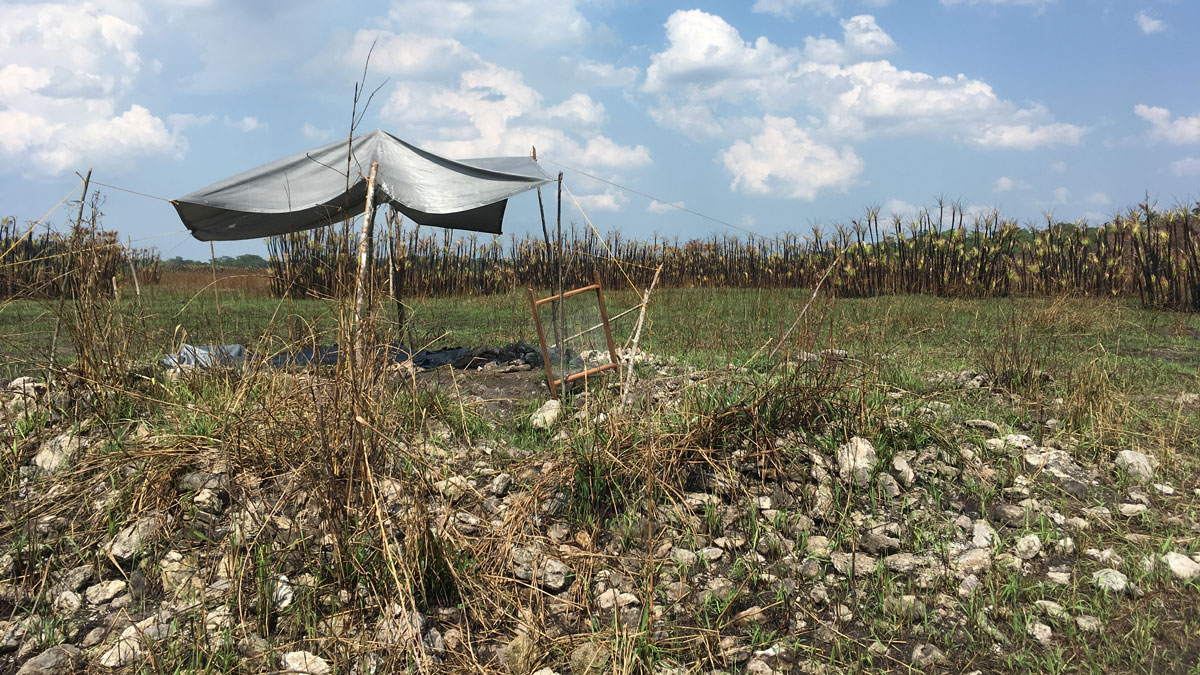
Small, tented archaeological dig in the middle of a sunny green field.
Archaeological evidence uncovered at the Birds of Paradise wetlands complex in Belize indicates that the community there survived the Maya collapse thanks to sophisticated knowledge of wetland farming. Credit: Tim Beach
Around 1,200 years ago, a series of severe droughts struck Belize, Guatemala, and southern Mexico. Crops failed, major cities were abandoned, and political strife spread like disease. Yet amid the calamity, some communities thrived.
In new research published in the Proceedings of the National Academy of Sciences of the United States of America, researchers detail a once-flourishing ancient Maya settlement in northern Belize that appears to have outlasted these historic droughts by a keen reliance on local wetlands.
The study shows the ancient Maya “were savvy consumers of local resources” and turned “unusable” lands into highly productive farms, said Shanti Morell-Hart, an archaeologist and ancient Maya expert at Brown University who was not involved with the research. Rather than just being used during “times of desperation,” she added, the study underscores how wetlands were “a regular part of ancient Maya life.”
The new settlement is located within the Birds of Paradise wetlands complex, which was first identified in the early 2000s and more fully investigated with airborne lidar surveys in 2019. Lidar revealed numerous artificially constructed canals, and the complex has since undergone steady and careful excavation.
“This means hacking through the jungle,” said Tim Beach, a geoarchaeologist at the University of Texas at Austin and a coauthor of the new study. The complex is embedded in dense tropical foliage. To reach it, he explained, researchers have to wade through swamps, ford the Rio Bravo, and bring a machete-wielding crew to clear branches. “It takes a long time to get out there.”
Using lidar, trench excavations, and sediment cores, Beach and his colleagues determined the complex spans more than 13 square kilometers and was occupied during the Late Preclassic period around 2,000 years ago—and possibly much earlier.
More:
https://eos.org/articles/ancient-maya-wetlands-reveal-settlement-that-thrived-amid-collapse
 = new reply since forum marked as read
Highlight:
NoneDon't highlight anything
5 newestHighlight 5 most recent replies
= new reply since forum marked as read
Highlight:
NoneDon't highlight anything
5 newestHighlight 5 most recent replies

2naSalit
(104,783 posts)An important tool in finding locations to investigate. When I was in school it was just getting started, took a couple classes and saw that it would be a great tool for this as other applications.
Thanks for posting! 

orangecrush
(31,824 posts)Fascinating.


niyad
(135,288 posts)
Picaro
(2,449 posts)thanks for the post. Fascinating as usual.